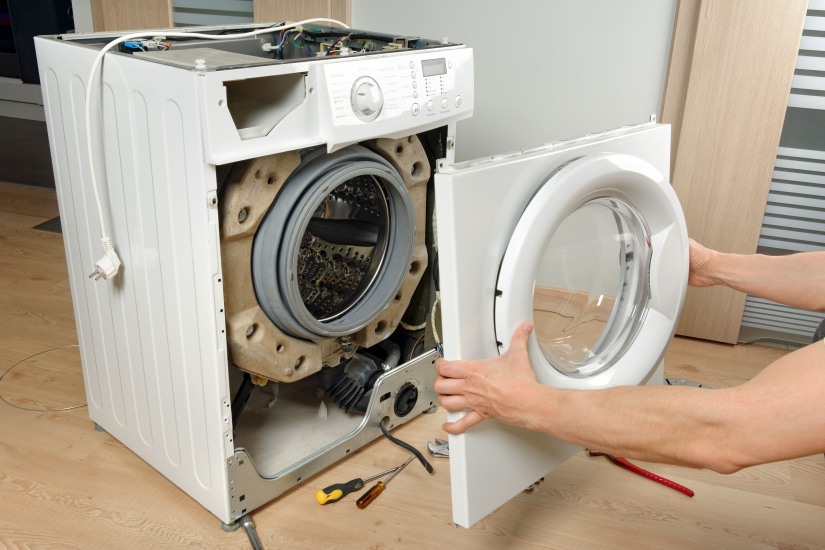
One of the questions we're asked most often — and one we try to answer as honestly as we can — is whether a broken appliance is worth repairing. The short answer is that it depends on several factors, and no engineer worth trusting will tell you it always makes sense to repair, any more than it always makes sense to replace. Here's how we think through the decision.
The 50% rule — a useful starting point
A rough framework used by many appliance engineers is this: if the cost of repair exceeds 50% of the cost of a comparable new appliance, replacement is often the more economical choice. This isn't a firm rule — it doesn't account for the age of the appliance, how long a replacement might last, or personal circumstances — but it's a reasonable starting point for the conversation.
For example, if a repair costs £150 and a comparable replacement would cost £400, that's a 37.5% ratio. In most cases, and assuming the appliance isn't very old, repair probably makes sense. If the repair costs £250 on the same £400 appliance, the calculation becomes less clear — and other factors start to matter more.
Age matters — but not as a single factor
The age of an appliance is relevant, but it's easy to overstate its importance. A well-maintained seven-year-old washing machine that needs a new door seal is probably worth repairing. The same machine with a failed motor or drum bearing failure might not be — not because seven years is old, but because those particular faults in an older machine may signal that other wear is approaching.
Approximate expected lifespans for common appliances under normal use:
- Washing machines: 8–12 years, depending on use frequency and maintenance
- Fridge-freezers: 10–15 years — fridges tend to last well if maintained
- Ovens and cookers: 10–15 years for electric ovens; gas cookers can last longer
- Dishwashers: 8–12 years
If an appliance is approaching or beyond these ranges and experiences a significant fault, replacement starts to look more sensible than a repair that buys a year or two more use.
What the fault actually is
Not all faults are equal — and this is where honest diagnostic advice becomes particularly important. Some faults that sound serious are actually straightforward to fix and reasonably priced. Others that sound minor are harbingers of more significant underlying failure.
Faults that usually favour repair
- Door seals — relatively cheap parts, straightforward to replace
- Pump filters and blocked hoses — often not even a parts replacement
- Heating elements — common, widely available, reasonable cost
- Thermostats — usually inexpensive and straightforward
- Fan motors — moderate cost, often extend appliance life significantly
- Carbon brushes — cheap parts, and replacing them can restore several years of life
Faults that may not favour repair
- Compressor failure in an older fridge — compressors are expensive and the labour intensive to replace
- Drum bearing failure in an older washing machine — depending on the model, labour costs can be high
- Control board failure — boards are expensive and sometimes unavailable for older models
- Refrigerant loss in an older fridge — depending on the refrigerant type, sourcing can be complicated
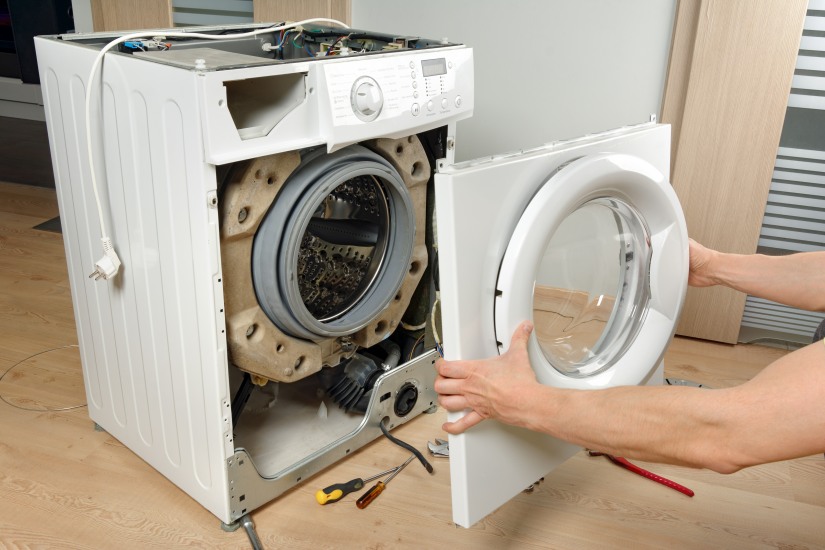
The nature of the fault matters as much as the age — some apparently serious faults are quick to fix, while some minor-sounding ones signal deeper problems.
Energy efficiency considerations
This is worth thinking about if your appliance is more than eight or nine years old. Energy efficiency ratings for household appliances have improved considerably over the past decade, and an older appliance — particularly a washing machine, dishwasher, or fridge — may be using noticeably more electricity than a modern equivalent.
If your fridge is 12 years old and consuming significantly more power than current models (you can check this with a plug-in energy monitor), the running cost difference over a few years may offset the cost of replacement even without a fault. This doesn't make repair the wrong choice, but it's a factor worth including in your thinking.
Availability of parts
Parts availability is an increasingly relevant factor. Manufacturers are legally required under UK and EU regulations introduced in 2021 to make spare parts available for a minimum of 7–10 years after a product is discontinued — the specific period varies by appliance type. However, for older models, parts can still be difficult to source or may only be available from third-party suppliers of varying quality.
If your appliance is old enough that parts are becoming hard to find, or if the parts available are of uncertain quality, that's a consideration when deciding whether repair represents good long-term value.
Environmental considerations
There's a reasonable environmental case for repair in many situations. Manufacturing a new appliance uses raw materials, energy, and produces emissions during transport. If an existing appliance can be repaired and will run reliably for several more years, that often has a lower overall environmental footprint than replacement — particularly if the old appliance ends up in landfill.
This isn't an absolute argument for repair in every situation — a very old, energy-inefficient appliance that needs frequent repair may have a higher lifetime environmental cost than a modern, efficient replacement. But repair is generally the more sustainable choice when the economics are close, and it's a legitimate factor to consider.
What we tell our customers
When we attend a repair visit, we'll give you a clear assessment of what's wrong, what a repair involves, and what it costs. We'll also give you our honest view of whether the repair makes sense given the age and condition of the appliance. We won't push a repair that doesn't make economic sense, and we won't recommend replacement just to avoid a job.
If you're unsure before booking, call us. We're happy to talk through the situation based on the fault and the appliance details you can describe — it often helps you decide whether a diagnostic visit is worthwhile, and it costs you nothing to have the conversation.
Questions to ask yourself
- How old is the appliance, relative to its expected lifespan?
- What is the fault, and is it a common, straightforward repair or a more complex one?
- What would a comparable new appliance cost?
- Is the repair cost above or below 50% of replacement cost?
- Has the appliance had other faults recently, suggesting general deterioration?
- Is the appliance noticeably inefficient compared to current equivalents?
- How long do you expect to remain in the property?
There's no formula that answers this perfectly for everyone. But working through these questions honestly — ideally with the input of an engineer who will give you a straight view rather than a sales pitch — usually points you toward a reasonable decision.
Not sure whether your appliance is worth repairing?
Give us a call and describe the fault — we'll give you an honest view before you commit to a visit.