A faulty oven affects daily life more than most appliance problems. We diagnose the issue clearly, explain your options honestly, and carry out repairs with care — covering electric ovens, fan ovens, gas cookers, and ceramic hobs.
Ovens tend to fail in one of a few recognisable ways — not heating to temperature, not heating at all, fan not running, or controls becoming unresponsive. In most cases, the fault is traceable to a specific component: a heating element, a thermostat, a fan motor, or a control board.
Our engineer Paul Rearden has worked on ovens and dishwashers specifically for seven years, and is familiar with the range of makes and models found in UK kitchens — from standard single ovens to range cookers and combination microwave-ovens.
We approach every visit the same way: diagnose first, explain clearly, give you an honest view on whether repair is worthwhile, then proceed only if you're happy to go ahead.
Book a Repair Visit
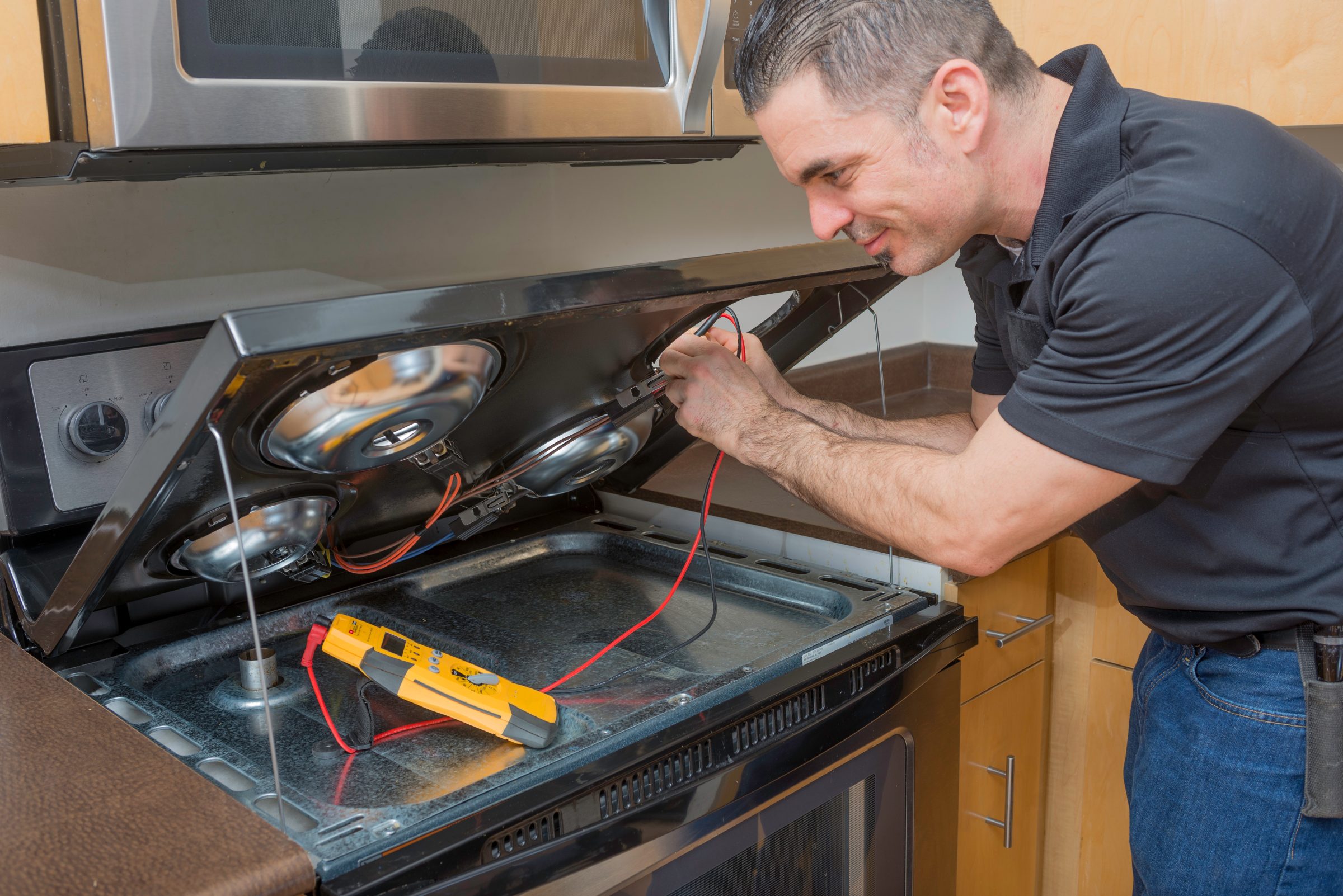
An oven that runs but doesn't reach temperature — or doesn't heat at all — is the most common fault we see. In electric ovens, a failed heating element is often the cause. In fan ovens, the element and fan motor both need checking. We'll establish which component has failed before ordering any parts.
Fan ovens circulate heat for more even cooking. If the fan motor fails, heat distribution becomes uneven — food may burn at the top while staying undercooked below. A fan motor replacement is typically a straightforward job once the oven is properly accessed.
If your oven is consistently over- or under-cooking at a given setting, the thermostat may have drifted or failed. A faulty thermostat can also cause the oven to cut out mid-cook, or to continue heating beyond the set temperature. We'll test the thermostat and replace it if necessary.
Gas hobs that won't ignite, spark continuously, or only light on certain burners are common complaints. Ignition faults are often caused by food debris blocking the igniter, a worn spark electrode, or a faulty ignition module. We'll identify the cause and carry out the appropriate repair safely.
Digital control panels can fail or become unresponsive over time — sometimes from heat exposure, sometimes from moisture ingress or a software fault. We'll assess the panel and advise on whether replacement is practical and economical for your model.
A loose or broken door hinge is a safety concern as well as an efficiency issue — heat escapes and the door may not close flush. A deteriorated door seal also allows heat loss. Both are replacement jobs we carry out regularly.
Let us know the make, model, and symptoms. A range cooker behaves differently from a built-under oven, and knowing the specifics in advance helps us arrive prepared.
We'll test the elements, thermostat, fan motor, and controls as appropriate. For gas appliances, we follow safe working practices throughout.
You'll know exactly what the fault is and what a repair involves before anything is agreed. If the oven is old and the repair cost is significant, we'll flag that clearly.
Once agreed, we carry out the repair and test the oven through a full heating cycle before leaving. For gas work, we confirm safe gas pressure and check for leaks.
Work on gas cookers and hobs must only be carried out by a Gas Safe registered engineer. Attempting gas appliance repairs without appropriate qualifications puts you and others at serious risk. If you smell gas near your cooker, do not use the appliance — turn off the gas supply at the meter, open windows, and contact the National Gas Emergency line on 0800 111 999. Once safe, get in touch with us to arrange an inspection.
Uneven cooking in a fan oven is most often a sign of a failing fan motor or a partially failed element. In a conventional oven, a failing top or bottom element may be the cause. Thermostat drift can also contribute. We'll test each component to isolate the issue.
Yes, we work on range cookers and dual-fuel models. These tend to be more complex — often combining a gas hob with electric ovens — but the diagnostic approach is the same. If gas work is involved, our Gas Safe registered engineer handles that element.
Usually, yes. A heating element is one of the more straightforward and cost-effective oven repairs, and it doesn't make much difference whether the oven is 4 years or 12 years old — if the rest of the appliance is in good condition, it's typically worth doing. We'll give you an honest view based on the specific situation.
An element or thermostat replacement can often be completed within the first visit, usually taking an hour or so. More complex repairs, or those requiring parts to be ordered, may require a return visit. We'll let you know at the time of diagnosis.
Contact us and we'll arrange a diagnostic visit at a time that suits you.